
Mixing – Mastering
Turning captured material into a finished balance, with decisions you can justify and repeat.
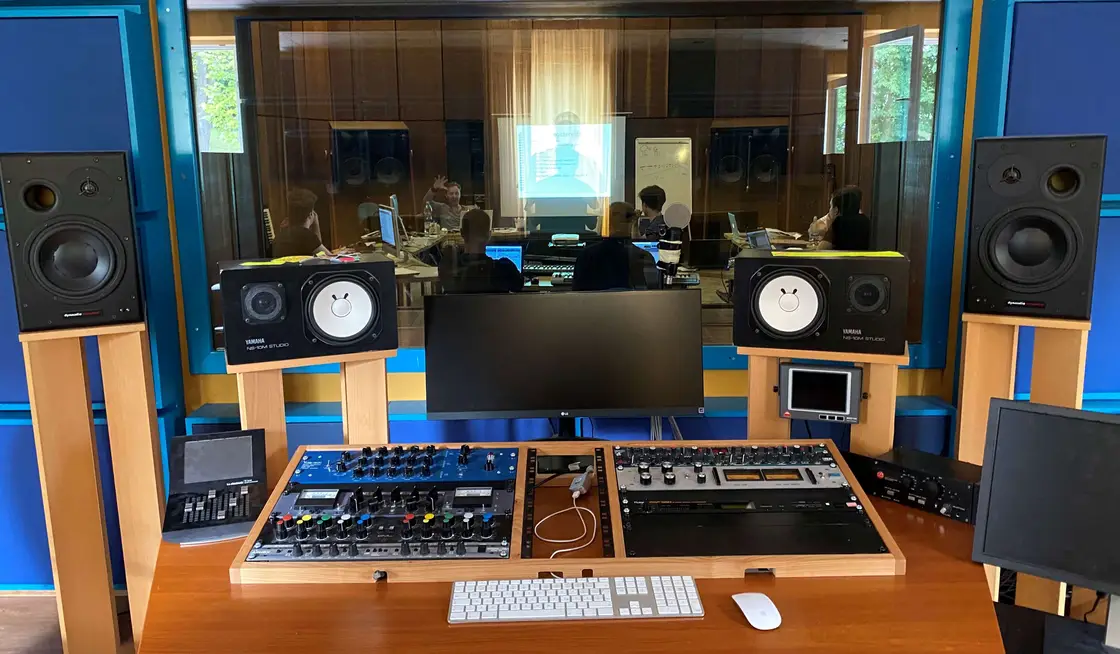
Mixing is the part of the course where taste and technique meet, so it is taught as a sequence of decisions rather than a set of settings. There is no correct compressor setting; there are reasons for a choice, and the ability to hear whether it worked.
Mastering is treated as a distinct discipline with a narrow purpose: final tonal balance, level and delivery. Realistic expectations matter here — mastering finishes a mix, it does not repair one.
Critical listening ties the module together. Learning to compare at matched loudness, and to notice when your ears have stopped being reliable, changes results more than any plug-in purchase.
Curriculum
Mixing principles
- Starting order and building a balance
- Level, panning and arrangement space
- Serving the music rather than the meters
- Working to a reference
Processing
- Equalisation — corrective and tonal
- Compression, limiting and gating
- Parallel and serial processing
- Automation as a mixing tool
Plug-ins and outboard
- What analogue emulation does and does not do
- Gain staging inside a digital mix
- CPU, latency and delay compensation
- Building a small, well-understood plug-in set
Effects and space
- Reverb types and their uses
- Delay as depth and as rhythm
- Modulation and saturation
- Creating depth without losing definition
Mastering
- What mastering is for
- Tonal balance and loudness
- Sequencing and delivery preparation
- Loudness targets for different platforms
Critical listening
- Learning your monitoring environment
- Comparing at matched loudness
- Managing listening fatigue
- Deciding when a mix is finished
What you will be able to do
- Build a mix in a deliberate order rather than reacting at random.
- Use equalisation and dynamics for a stated purpose.
- Create depth and space without blurring the result.
- Prepare a master that holds up on different playback systems.
Practical components
Mixing exercises are done at home and then reviewed in the studio on reference monitoring, which is usually where the disagreements — and the learning — happen.