
/ Sound engineering
Sound Engineer Training
From acoustic fundamentals to a finished mix: recording, mixing, mastering, film sound and editing, learned on Pro Tools online and practised in the studio.
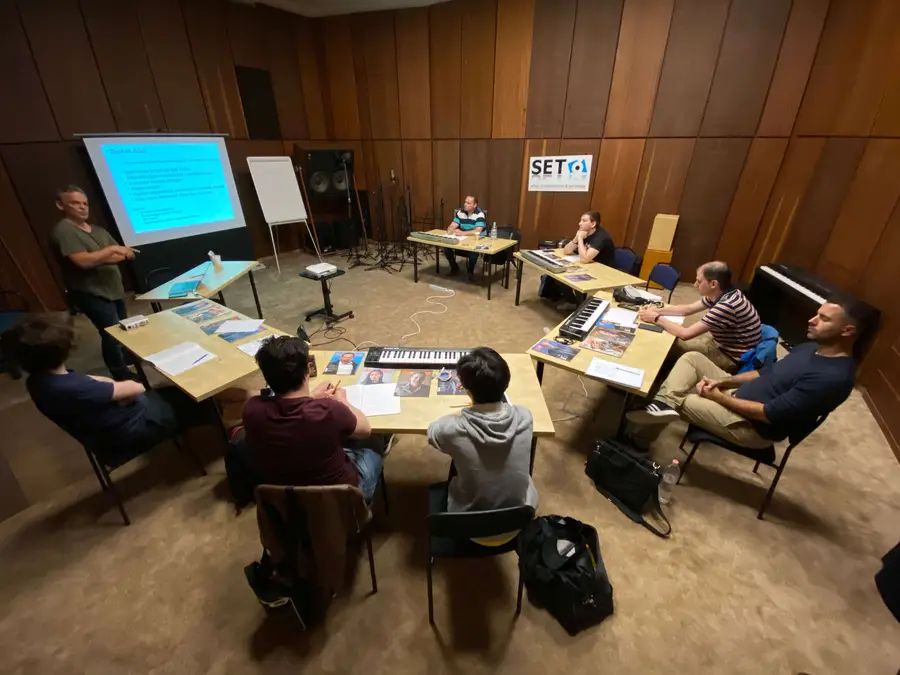
SET is built on a semi-virtual learning concept. You work through the theory online at your own pace, then build the practical side in a studio alongside working professionals, in groups of no more than 12.
The point of the concept is that theory should not tie you to a place, and practice should not be left out.
The learning platform is available from anywhere with an internet connection, whenever it suits you.
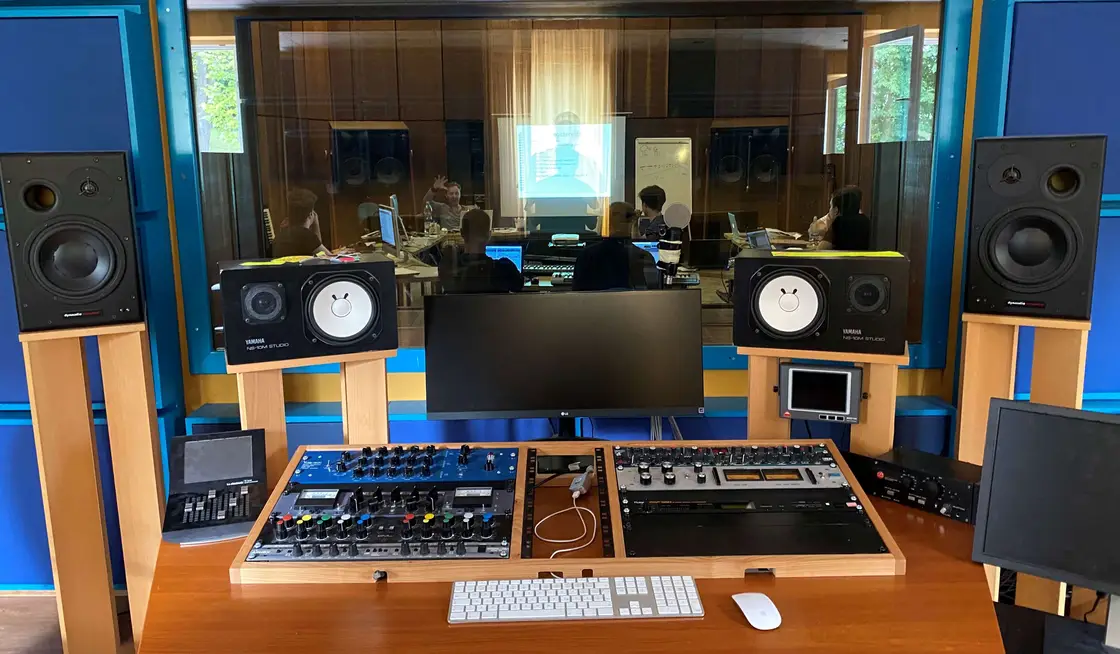
On the in-person weekends you work in a studio: you set up, record, mix, and hear the result immediately.
Our teachers have several years of professional experience and still work in the industry today.
A course takes a maximum of 12 participants, and practical exercises run in even smaller groups.
We provide the Pro Tools access needed for study during the course, so you work on the same surface the studios use.
Where there is interest, we organise an optional study trip or studio visit for the group.
Sound engineering, media composition and media photography. All three follow the same semi-virtual concept.
/ Sound engineering
From acoustic fundamentals to a finished mix: recording, mixing, mastering, film sound and editing, learned on Pro Tools online and practised in the studio.
/ Media composition
From harmony and arrangement to a finished cue: composing for film, games and advertising, produced with MIDI and real recordings.
/ Media photography
From light and optics to a finished, edited image: studio practice, advertising and portrait work, and a portfolio you can show to clients.
Online and in-person phases alternate. One is about understanding, the other about getting it under your hands.
You get your own access to the learning platform, where the material is organised into modules.
Teaching videos, written notes and interactive tasks make up the material together — they do not replace each other.
You work through tasks alone or in a small group, at a difficulty that builds month by month.
You get professional feedback on the exercises you complete, not just a score.
On the in-person weekends you apply what you learned online in a studio environment.
A computer can now do what once needed a large studio. Choosing a microphone, hearing what a room does and spotting a fault in the signal path, though, can only be learned in front of the equipment.
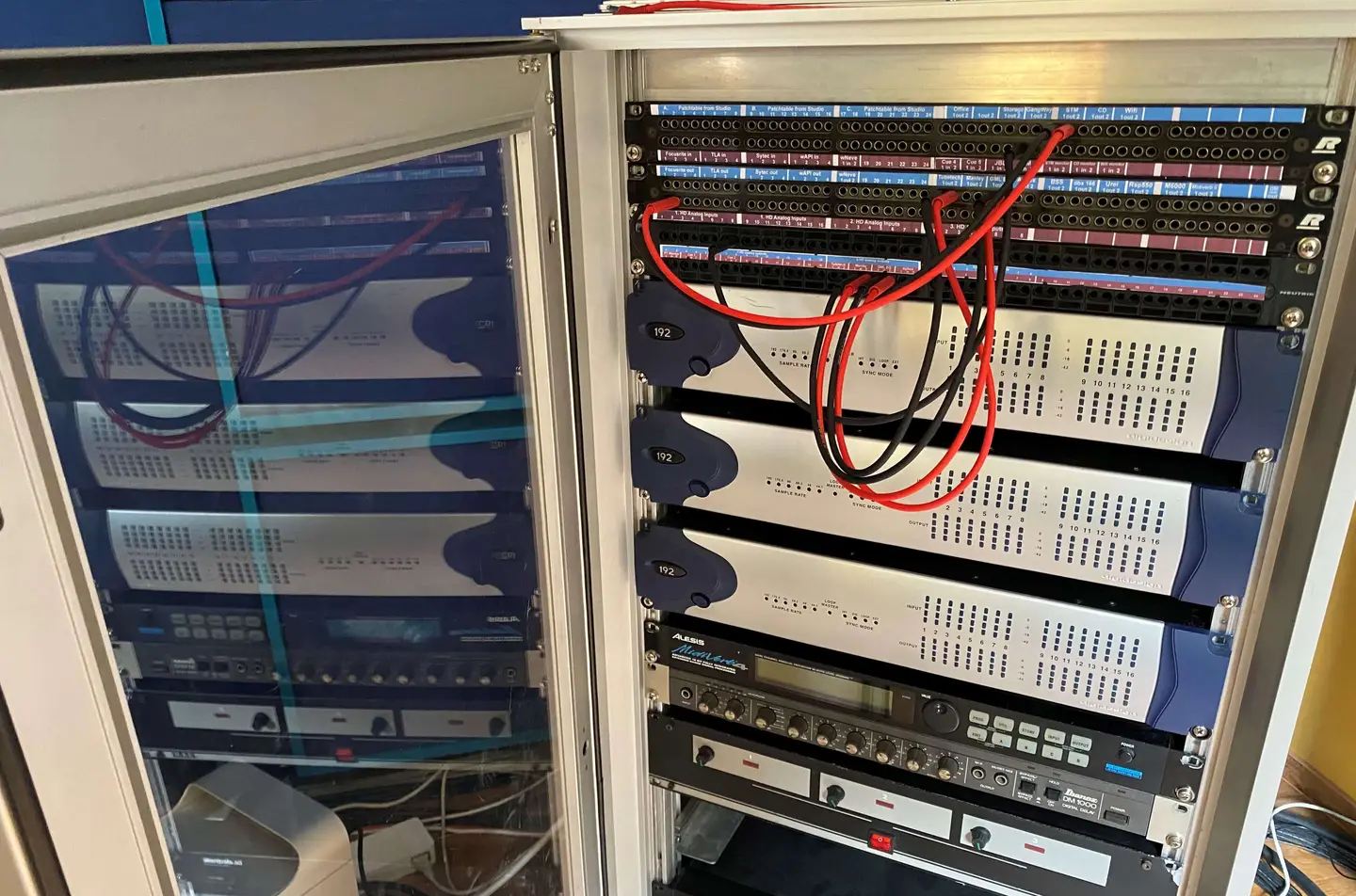
Patchbay, preamp, converter, monitoring. We follow the signal from the microphone to the loudspeaker.
Multi-microphone setups, instruments and rooms — in practice, not only on a diagram.
You carry on working with your own recordings and compare your decisions by critical listening.
Sound engineers, composers and photographers who both teach the work and do it.
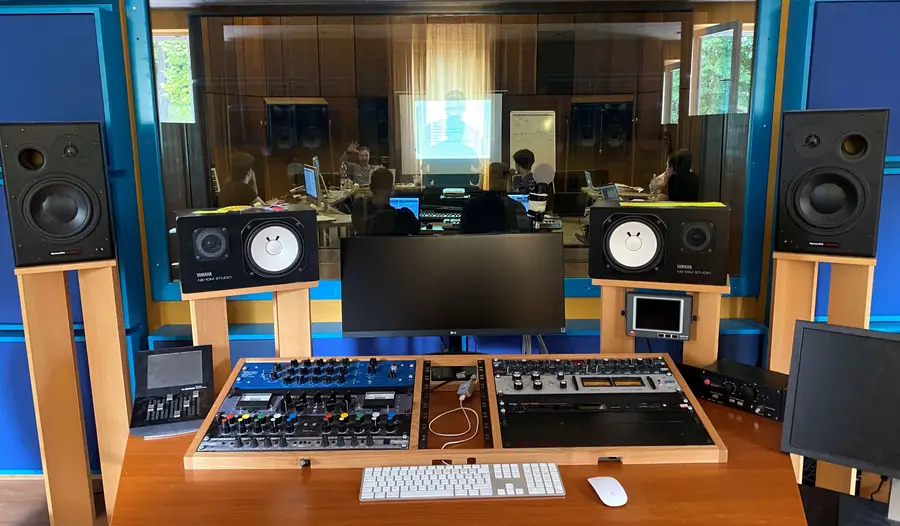
A control room with reference monitoring, a recording space, and the full signal chain that goes with it.
We invite bands into the studio and stream the session live. Earlier broadcasts can be watched at any time.
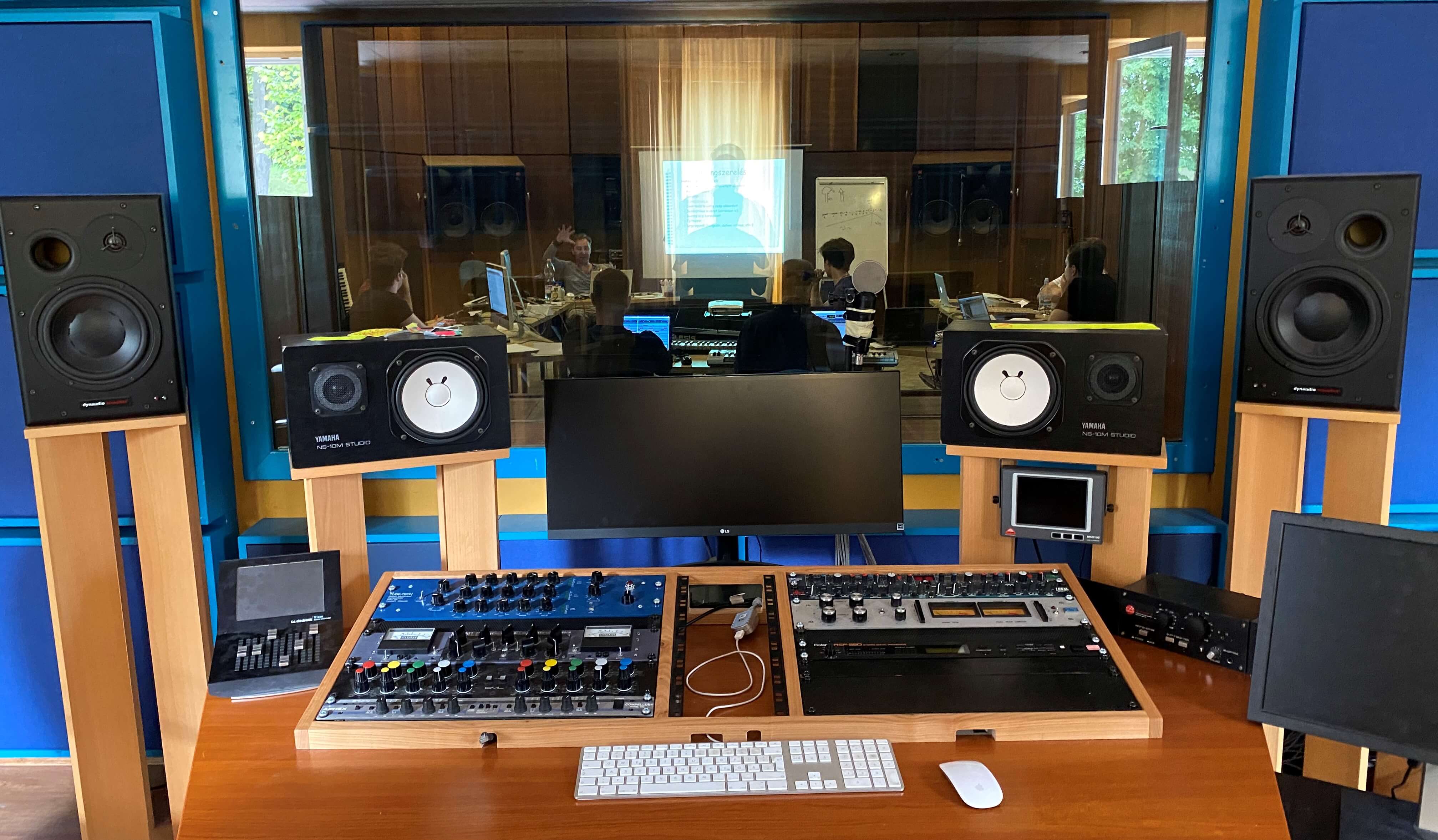
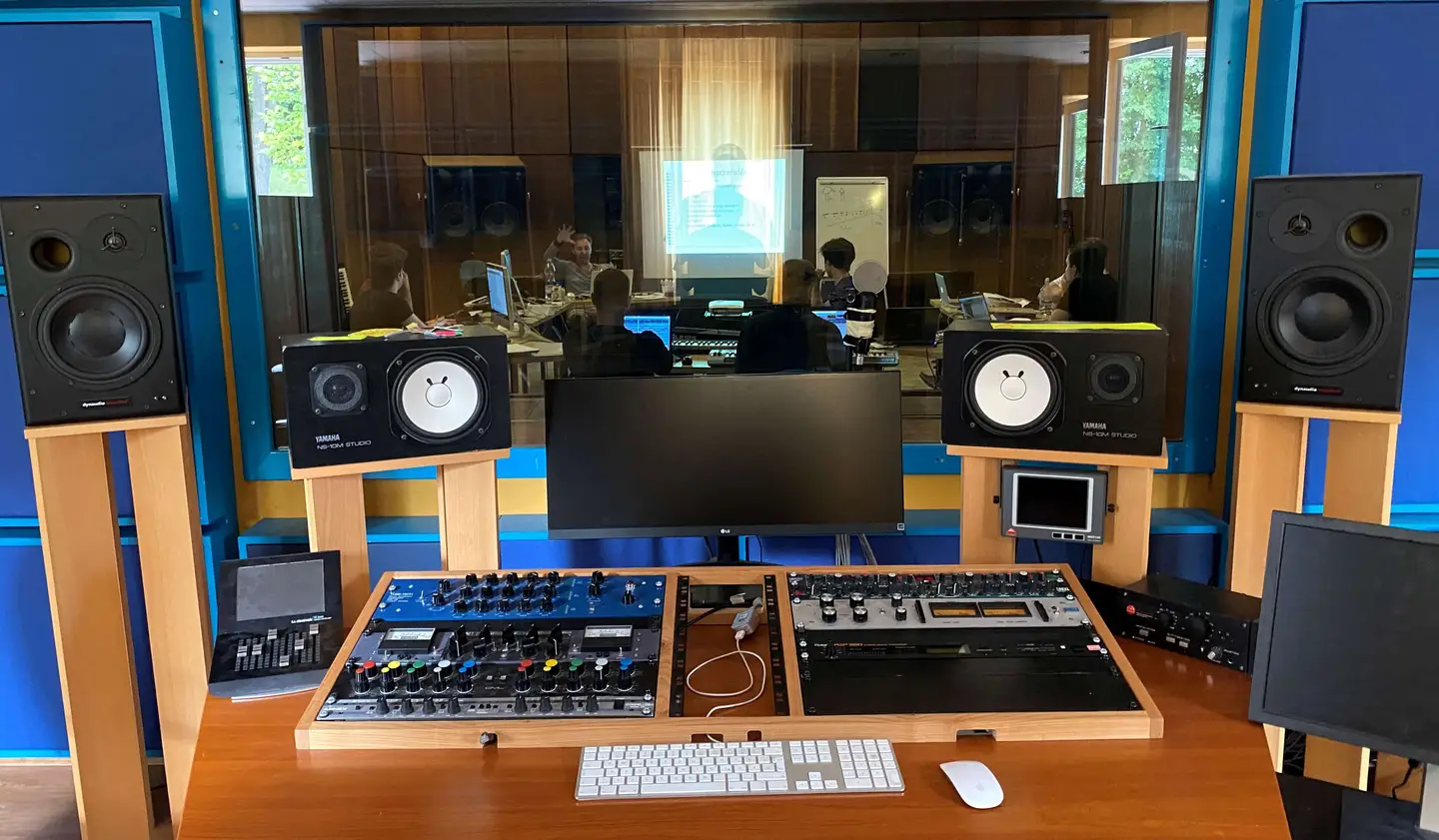
The control room: reference monitoring, analogue outboard, and the seminar room visible through the glass.
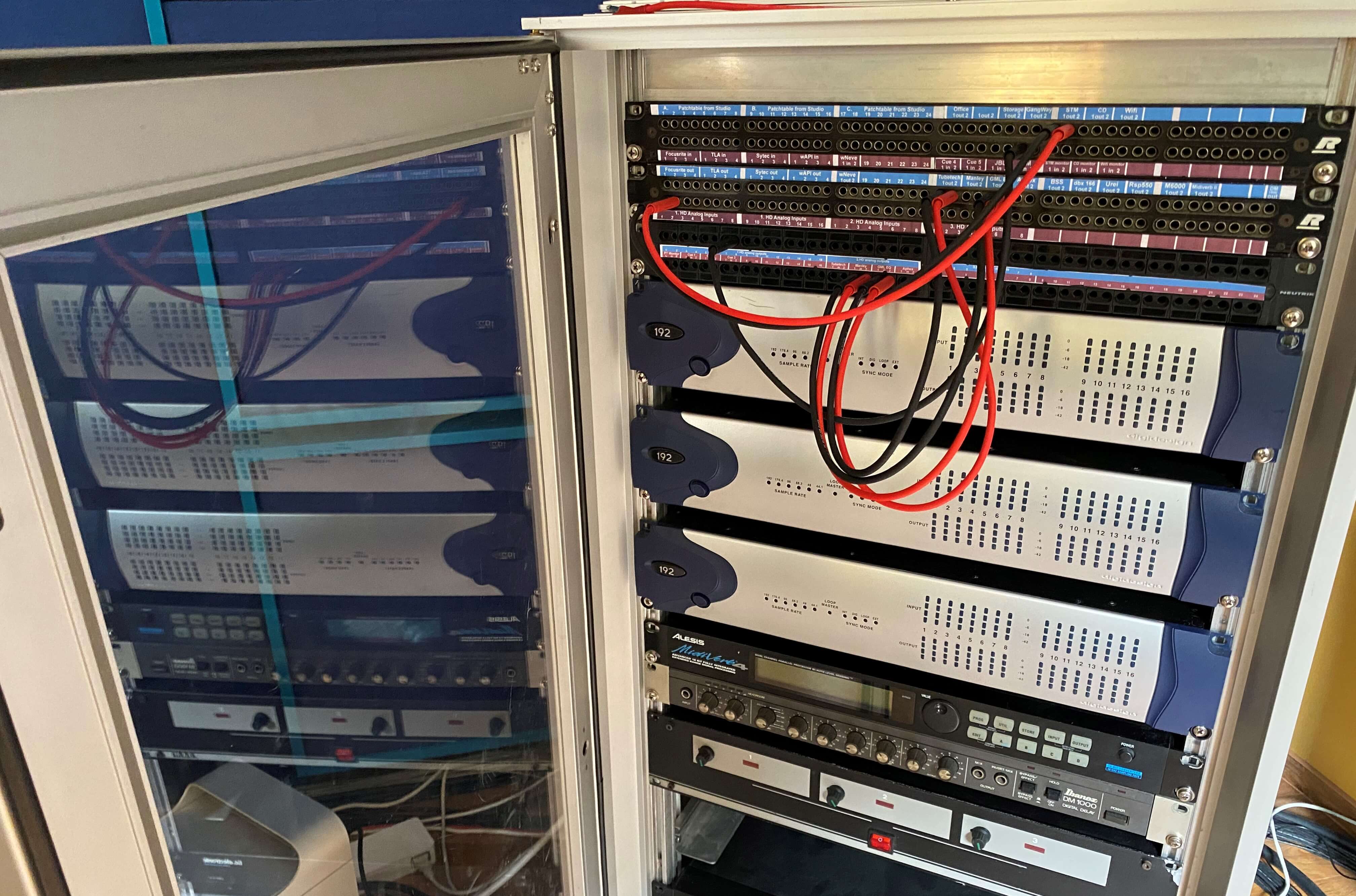
A labelled patchbay and the converters behind it. This is where the signal path can be traced.
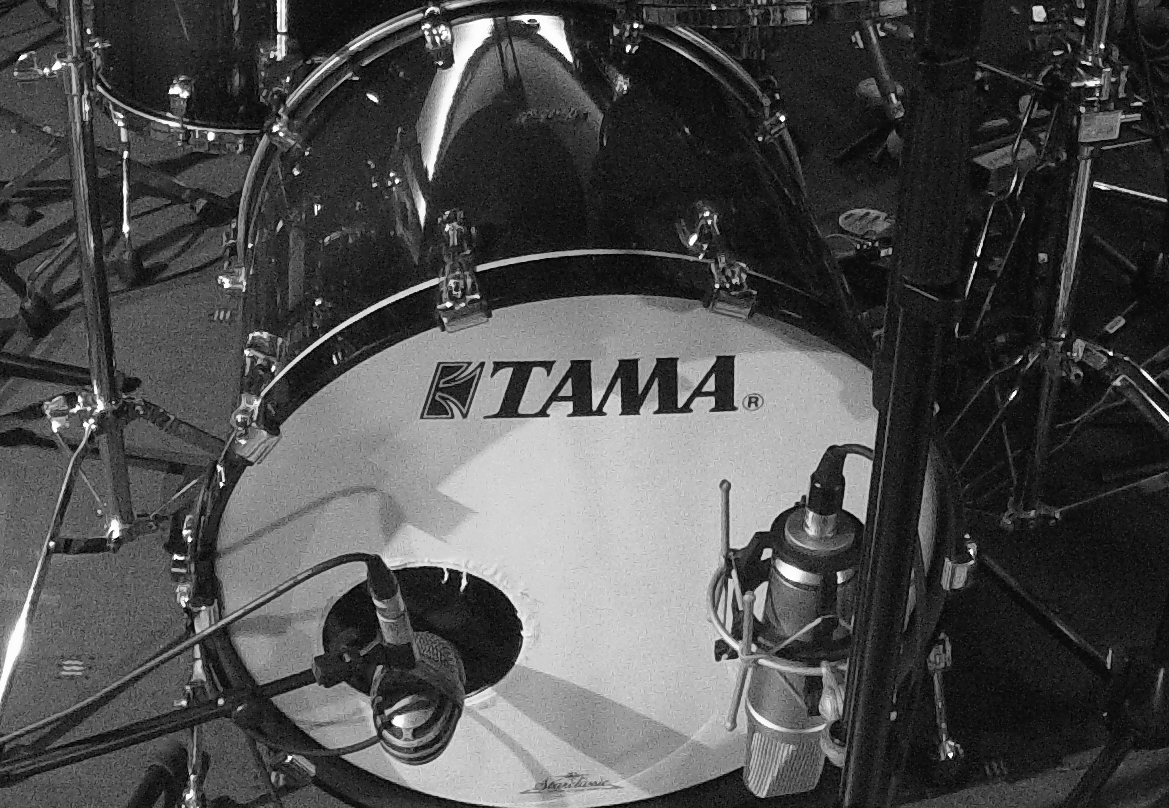
A two-microphone bass drum setup from a recording exercise.
Send us a message and we will forward the current application material and the details of the next intake.